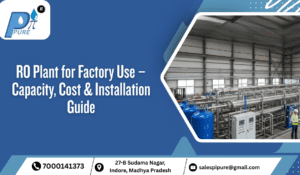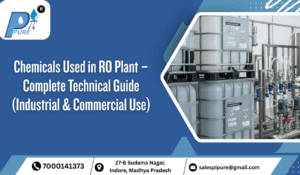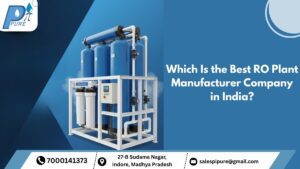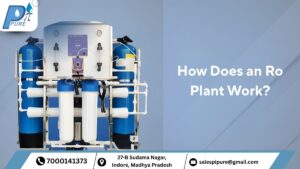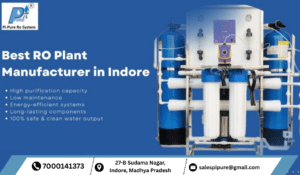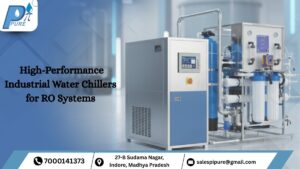
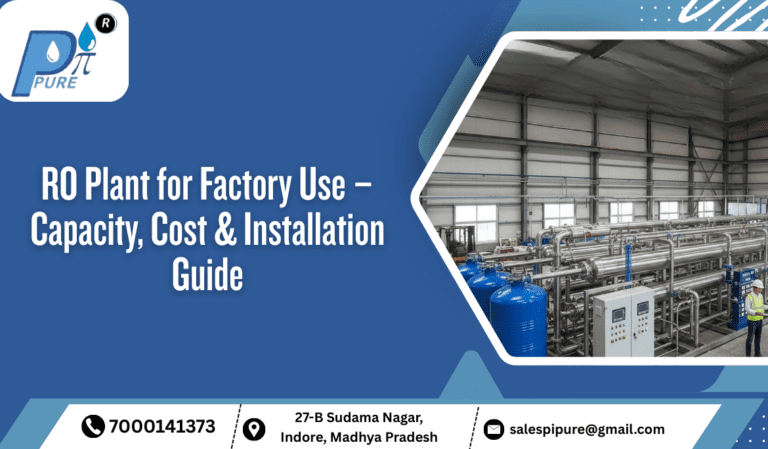
A quality Reverse Osmosis (RO) System is necessary to ensure that the water is of consistent quality in the case of manufacturing units, food processing plants, pharmaceuticals, and commercial facilities. An efficient RO plant enhances the quality of products, the equipment is not subject to scaling, and no cost of operations incurred in the long run, is incurred.
This guide answers the question of the choice of capacity, the expected cost, and the expected experience during the time of installation, so that you can make an informed choice on behalf of your factory.
RO Plant Near Me in Indore
Indore factories are also using industrial RO plants more, with the increased TDS and the water requirements being more demanding. Local vendors typically provide site inspection, water testing, and tailor-made system design, depending on your use, i.e., boilers, cooling towers, process water, or packaged drinking water.
In assessing the vendors, one should focus on the vendors who supply the following:
- Water analysis before the installation.
- Daily consumption-based system sizing.
- After-sales service and AMC services.
- Ready availability of spares and membranes
When collaborating with such an established manufacturer as Pi Pure, your RO system will be designed to work effectively and last long.
Installation & Maintenance Guide
The installation of industrial RO is not just a matter of equipment installation on-site:
Installation typically includes:
- Layout planning and testing of raw water.
- Civil foundation and piping connection.
- Control panel and wiring of electricity.
- Water quality validation and trial run.
Maintenance essentials:
- Frequent replacement of the pre-filter.
- Routine membrane cleaning (CIP).
- The measurement of pressure, flow, and TDS.
- Servicing of electrical components and pumps annually.
Maintenance is not only used to maintain the quality of output but also helps to prolong the life of a membrane, as well as minimize downtime.
500 LPH to 5000 LPH RO Plant—Which Capacity Is Right for You?
Capacity selection is based on the hourly consumption and peak demand:
500-1000 LPH: small workshops, laboratories, cafe.
1000-2000 LPH: Medium factories, schools, clinics.
3000-5000 LPH: Large food processing plants, inc. manufacturing plants.
Computations should always be done on actual use, not only on future projections. When capital is oversized, there is a rise in the cost and when undersized, there is a restraint in the operations.
How to Choose the Right Supplier
Assess well before making your selection of RO plant supplier:
- Membranes, pumps, vessels: quality components.
- Level of system automation (manual/PLC-based)
- Response time to warranty and service.
- Price and scope transparency.
An excellent supplier will give a good proposal with a proper layout of the plant, recovery rate, reject water, and schedule of maintenance.
Conclusion
An industrial RO plant is a long-term investment in efficiency and quality of the products in your factory. To have uniform performance, the optimal choice of the required capacity, professional installation, and a promise to perform regular maintenance should be taken into consideration.
When you have an RO plant planned in Indore, then you need a supplier who can provide technical clarity, reliable assistance, and scalability of its solutions, because all you need is a water treatment system that will expand with your business.