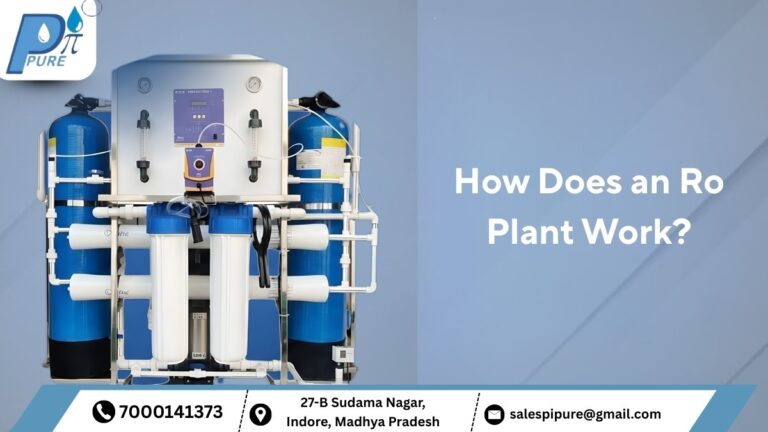
How Does an RO Plant Work?

Home / Blog / How Does an RO Plant Work?

Health wise and in daily use, clean water is required, and it must be safe. One of the most trusted systems of water purification at homes, industries and in the commercial areas is a Reverse Osmosis (RO) Plant. 

RO plants eliminate the contaminants present in the water which are dangerous to human beings and make water clean and safe to consume and used with the help of the advanced reverse osmosis membranes and reverse osmosis chemicals.

What Is a Reverse Osmosis (RO) Plant?

Reverse Osmosis Plant is another water purification system that eliminates dissolved salts, bacteria, chemicals, and impurities in water. It exerts pressure to push the water into the semi-permeable reverse osmosis membrane which will only allow through clean water. A great number of reverse osmosis plants manufacturers produce RO systems to be used domestically, commercially and industry-wise.

Why Reverse Osmosis Is Used for Water Purification

One of the reasons why reverse osmosis has gained a lot of popularity is because it can provide high quality purified water. It filters the water of up to 99 per cent of the contaminants, such as the heavy metals, pesticides, fluoride, and salts. This renders RO technology to be reliable when dealing with hard water or even contaminated water. An RO plant manufacturer in Indore or other cities will design systems that are specific to the local quality of water and use requirements.

Working Principle of a Reverse Osmosis Plant

Reverse osmosis plant operation occurs in few steps:

  • Raw water enters the system.
  • Dust and large-sized particles are filtered off in pre-filters.
  • Water is pushed through the Best Reverse Osmosis Membrane under pressure.
  • Impurities are rejected and flushed out.
  • Clean and purified water is collected for use.

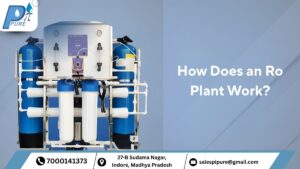
Key Components of an RO Plant System

  • Pre-filters (sand and carbon filters)
  • High-pressure pump
  • Reverse Osmosis Membranes
  • RO housing and pipelines
  • Post-treatment using reverse osmosis chemicals


Applications of Reverse Osmosis Plants

  • Drinking water purification
  • Industrial water treatment
  • Hospitals and laboratories
  • Food and beverage industries
  • Hotels, schools, and apartments


Benefits of Using a Reverse Osmosis Plant

  • Removes harmful impurities
  • Enhances the flavour and smell of water.
  • Effective and trustworthy purification process.
  • Low maintenance and protracted membrane life.
  • Applicable in the domestic and industrial fields.

Why Choose PI Pure RO Plant Manufacturer?

PI Pure RO Plant Manufacturer is reputable among reverse osmosis plant manufacturers. They offer quality RO systems, long-lasting reverse osmosis membranes, professional installation and quality after-sales services. They have efficient and cost-effective RO plants that are tailored to the requirements of their customers.

FAQs About RO Plant

An RO purifier filters water, forces it through reverse osmosis membranes, and drives off dissolved contaminants.

Yes, RO water is safe provided there is an appropriate balance of minerals.

An RO plant gets rid of salts, bacteria, viruses, fluoride, heavy metals and chemicals.

Reverse Osmosis Membranes are used to filter between pure water and contaminants.

A good RO plant manufacturer promises performance, quality and service.

Reverse Osmosis Plants are used in residential buildings, hospitals, commercial buildings, hotels, and industries.
In any reverse osmosis system, pre-filtration is as important as the main RO system membrane. The wound filter cartridge is one of the most popular pre-filters that are used in commercial and industrial reverse osmosis plants. We supply high-quality and long-lasting wound filters, which safeguard the membranes, enhance water quality, and improve the system’s efficiency in the long run, at PI Pure RO System, a reputable Ro Plant Manufacturer in Indore.

What is a Wound Filter? how Does It Work?

This is a wound filter that is a cartridge constructed by winding a taut polypropylene or cotton yarn around a central core. The direction in which the winding is conducted forms a pattern that creates a gradient structure, which encases particles of varying sizes across the filter. The special design permits wound filters to:

  • Get big particles on the outer layers.
  • Fine impurities are pushed further in.
  • Reduce the loads on reverse osmosis membranes to increase their lifespan.

Such filters are best suited to eliminating sediment, rust, sand, silt, and other suspended solids before water enters the RO process.

Wound Filter Cartridge Types and Uses

The PI Pure RO System proposes various wound filters by application –

Polypropylene Wound Filter Cartridges – These are the most useful in general applications in commercial reverse osmosis systems and mineral water RO plants.

Cotton Wound Filters – They are applied in a few industrial processes where they need to be compatible with chemicals.

Glass Fibre Wound Filters – Ideal in cases where it is high temperature and resistance to chemicals.

Such uses are industrial RO water purifiers, demineralised water plants, FRP RO plants, and ultrafiltration membrane filter systems.

Characteristics and Specifications of Wound Filters

What makes our wound filter cartridges unique – 

Great dirty holding capacity – Dirt holding capacity is very high, as opposed to good filters.

Custom micron ratings – 1-100 microns available to customise filtration to different levels.

Durability – Can be used effectively in FRP pressure vessels at high pressure.

Compatibility – Can be used with residential RO systems as well as large-scale industrial reverse osmosis systems.

How Wound Filters Improve Water Filtration Efficiency

Wound filters in your system guarantee –

Longer membrane life – Safeguards the finest reverse osmosis membranes against clogging and regular washing with RO membrane cleaning chemicals or membrane washing chemicals.

Increased system performance – Less downtime in commercial RO plants and industrial reverse osmosis plants.

Cost savings – Reduces the frequency of use of reverse osmosis chemicals and reduces the cost of operation.

Better water quality – Added value of taste and clarity, particularly when used with coconut shell activated carbon and RO antiscalant treatment.

Lifespan and Maintenance of Wound Filter Cartridges

In order to make performance consistent – 

Periodic cleaning – Periodically check the filter to make sure it is not clogged or discoloured, at least once every 2-3 months.

Replacement Cycle – Change wound cartridges at least every 3-6 months, based on the quality of raw water.

System Protection – Operate with other units such as multiport valves, electronic dosing pumps, and RO control panels to operate efficiently.

Professional Servicing – For very large industrial RO systems, adhere to maintenance schedules recommended by professionals.

Conclusion

A Wound Filter Cartridge is an easy but effective method that is essential in securing RO systems and in delivering quality water. In the PI Pure RO System, we provide the latest wound filters that are durable, efficient, and offer prolonged functionality in both commercial and industrial reverse osmosis plants. Wound filters can significantly extend the service life of your RO system and reduce maintenance expenses when properly maintained and replaced on schedule.

Translate »